

QuantaCore™
Hardware-Native Topological Resources:
Measurement-Based Quantum Advantage
Making NISQ devices ready for practical quantum computing through modular architecture and operator-aligned basis migration
Unlocking superior quantum computing performance through Z-orthogonal stabilizer states and GPU-accelerated MBQC protocols
Validated
No Mitigation
Correlation
Modules
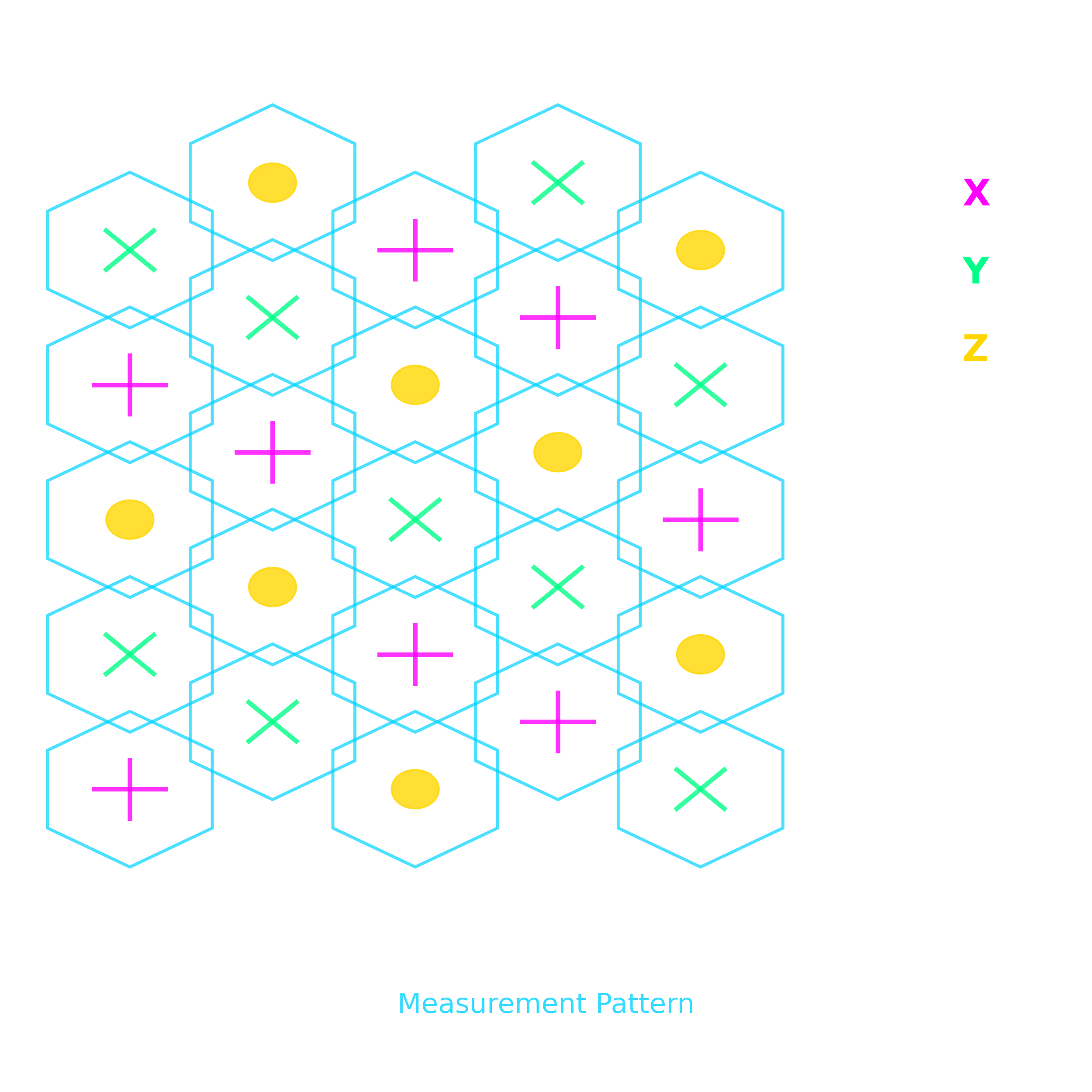
QuantaCore™ Platform
Operator-Aligned Quantum Resources for Scalable MBQC
World-record modular quantum computing through Basis Migration technology
🏆 World Record: 116-Qubit Validation on IBM Quantum
Validated January 2026 on IBM ibm_fez (156-qubit Heron R2) | 9.7× larger than previous MBQC demonstrations
Linear Scaling Demonstrated
Only 0.9% fidelity degradation over 10× scale increase — demonstrating robust modular independence and pathway to 1000+ qubits
Technology Stack
Basis Migration Engine
Patent-pending deterministic circuit that relocates quantum information from the computational (Z) basis into symmetry-protected Y⊗Z orthogonal manifolds, creating independent error channels.
OrthoTiles™ Modules
Independent 4-qubit building blocks with isolated error channels. Each module operates in its own error space, preventing cascading failures across the system. Prepared in parallel for efficient scaling.
EigenSpectrum™ Analyzer
Real-time verification framework producing operator-level manifold integrity metrics. Enables instant accept/reject decisions without exponentially costly quantum state tomography.
Y⊗Z Orthogonal Protection Mechanism
Information encoded in the Y⊗Z manifold is orthogonal to Z-basis noise (dominant error channel on NISQ hardware). Mathematical orthogonality Y·Z = 0 creates independent error channels: Z-dephasing doesn't corrupt Y⊗Z correlations.
Measured 95.3% Z-orthogonality success (⟨Z⟩ ≈ 0) confirms information successfully migrated out of computational basis.
Traditional quantum computing encodes information along Z-axis (north-south pole of Bloch sphere). Z-noise directly corrupts this encoding.
Y⊗Z approach: Information resides perpendicular to Z-axis, in the equatorial Y⊗Z plane. Z-noise rotates around Z-axis but doesn't project onto orthogonal Y⊗Z subspace — first-order immunity to dominant error channel!
🔬 Breakthrough Discovery: [[4,0,d]] Stabilizer State
Our research discovered that 4-qubit modules prepared via basis migration occupy a unique eigenspace characterized by 16 independent stabilizers with perfect Y⊗Z correlations and Z-orthogonality.
This creates a [[4,0,d]] resource state (4 physical qubits, 0 logical qubits encoded, distance d protection) optimized specifically for measurement-based quantum computing rather than direct information storage.
Measurement-Based Quantum Computing Applications
Quantum Chemistry
FeMoco nitrogen fixation simulations using modular MBQC protocols. Target: 400-1000 qubits via 100-250 OrthoTiles™
VQE & QAOA
Variational algorithms via measurement-based execution, bypassing cumulative gate errors through modular resource consumption
Quantum Teleportation
High-fidelity quantum state transfer using OrthoTiles™ as entanglement channels with Z-orthogonal protection
Quantum Internet
Distributed Y⊗Z entanglement for multi-party quantum computation and quantum key distribution protocols
Multi-Platform Hardware Compatibility
(156-qubit processor)
(Beta Q2 2026)
(Planned Q3 2026)
(Roadmap 2027)
A New Paradigm for Scalable Quantum Computing
QuantaCore™ demonstrates a practical pathway to quantum advantage through operator-aligned modular architecture. With world-record 116-qubit validation and linear scaling properties, our platform enables measurement-based quantum computing at scales previously thought impossible on NISQ hardware.
From sequential gate operations to parallel modular preparation.
From exponential error accumulation to isolated error channels.
From fragile global states to robust independent modules.
Patent Pending (U.S. Provisional Filed January 2026) | QuantaCore™, OrthoTiles™, and EigenSpectrum™ are trademarks of Quantum-Clarity LLC
| Hardware Platform | Scale Achieved | Fidelity/Performance | Status |
|---|---|---|---|
|
🏆 IBM Quantum (ibm_fez) Heron R2 Processor (156 qubits) |
116 qubits (29 OrthoTiles™) |
85.7% avg fidelity 97% peak correlation 96.6% success rate |
✅ VALIDATED January 2026 World Record |
| GPU-Accelerated Simulation & Development Platform | |||
|
Consumer GPU (RTX 3060) Development & Validation Platform |
12 qubits exact 16+ sampling |
~2 min protocol validation Full statevector |
✅ Production |
|
RTX 4090 High-Performance Development |
16 qubits exact 20+ sampling |
~20-30 sec 4-6× speedup |
Projected |
|
RTX 5090 Next-Gen Platform |
20 qubits exact 24+ sampling |
~12-18 sec 6-10× speedup |
Projected |
|
NVIDIA A100 Enterprise Development |
24 qubits exact 28+ sampling |
~8-12 sec 10-15× speedup |
Projected |
|
NVIDIA H100 Advanced R&D Platform |
28+ qubits exact 32+ sampling |
~4-6 sec 25-30× speedup |
Projected |
🏆 World Record: 116-Qubit Modular Quantum Computing
Achievement: 29 independent OrthoTiles™ modules (116 qubits total)
Performance: 85.7% ± 5.0% average fidelity (no error mitigation)
Peak Correlation: 97.02% Y⊗Z correlation (Module 26)
Success Rate: 96.6% (28 of 29 modules deployed)
Scaling: Only 0.9% fidelity degradation over 10× scale increase
Date: January 2, 2026 | Status: Patent Pending (USPTO)
✅ QuantaCore™ Platform: Validated Results
- 116 qubits on IBM Quantum (world record)
- 29 independent OrthoTiles™ modules
- 85.7% average manifold integrity
- 97% peak Y⊗Z correlation achieved
- 95.3% Z-orthogonality success
- 89.1% average Y⊗Z correlation
- First-order noise immunity confirmed
- Independent error channel isolation
- Linear scaling to 116 qubits
- Only 0.9% degradation over 10× scale
- Modular independence verified
- Pathway to 1000+ qubits established
🚀 GPU-Accelerated Development Platform
- 12-qubit exact statevector (validated)
- 16+ qubit sampling methods
- ~2 minute protocol validation time
- 10-100× speedup vs CPU-only
- Rapid circuit design iteration
- GPU-optimized stabilizer sampling
- Batch processing for efficiency
- Hardware-aware optimization
- GPU simulation → IBM QPU validation
- Module pre-screening before deployment
- Quality prediction algorithms
- Cost-effective protocol development
🔬 Technical Implementation
• IBM Quantum processors (Heron R2, 156 qubits)
• Qiskit 1.0+ with EstimatorV2 for hardware execution
• Topology-optimized qubit layouts for modular preparation
• Real-time EigenSpectrum™ verification (O(n) efficiency)
GPU Development Platform (Simulation):
• Framework: Qiskit + CuPy GPU acceleration + Python 3.11
• Methods: Exact statevector (≤12q), sampling-based (>12q)
• Optimization: GPU memory management, smart stabilizer sampling
• Resource states: 4-qubit Y⊗Z modules, scalable to N×4 qubits
📈 Platform Roadmap
→ Q2 2026: 200+ qubit demonstration, Rigetti/IonQ platform compatibility
→ Q3-Q4 2026: 500-qubit modular systems, first commercial partnerships
→ 2027+: 1000+ qubit systems, fault-tolerant integration, production deployment
💡 What Makes QuantaCore™ Unique
Independent OrthoTiles™ prevent cascading failures. When one module fails, others remain unaffected.
Patent-pending technology relocates quantum information to orthogonal manifolds for noise protection.
EigenSpectrum™ Analyzer provides O(n) verification vs O(2^n) tomography, enabling instant quality assessment.
Only 0.9% fidelity degradation over 10× scale increase proves pathway to 1000+ qubits.
Contact Us
Interested in working together? Fill out some info and we will be in touch shortly. We can’t wait to hear from you!